Wood-look porcelain used to occupy an awkward position in interior design. For a long time, it sat in the gap between two ideas: it was the cheaper, easier alternative to real timber, or it was a compromise made when the budget did not allow for the real thing. Neither framing held up particularly well, but both lingered.
That conversation has shifted, and it has shifted significantly. The wood-look porcelain tiles available today are not what they were ten or even five years ago. The technology has changed. The print quality has changed. The plank formats have changed. The surface textures have changed. As a result, the design conversation around the material has changed too.
Wood-look porcelain tiles are no longer being chosen because something else was out of reach. They are being chosen on their own terms, and increasingly by clients who could have gone in several directions. For many homeowners, architects and designers, the appeal is not simply that porcelain can resemble timber. It is that it can bring the warmth and rhythm of timber into spaces where real wood is not always the most practical or durable answer.
At WOMAG, this shift is visible every week. Architects, designers and homeowners are arriving in the showrooms with wood-look porcelain tiles on the brief from the outset, not as a fallback. The material has earned its place. But like any category that has evolved quickly, it rewards a closer look. Specifying wood-look porcelain well is not about picking a tile that looks like timber. It is about understanding what the material is now capable of, where it performs best, and how to select it with the same care that any other serious surface deserves.
Why the category has changed
The wood-look porcelain produced by the leading Italian and Spanish manufacturers today is closer to architectural surface design than to tile imitation. Advancements in digital printing have made it possible to produce planks with tonal depth, natural grain variation and surface texture that read convincingly underfoot and under changing light. The repetition that once gave wood-look tiles away has been largely engineered out by serious producers.
This matters because wood-look porcelain is usually selected for large surfaces. A single tile can look convincing in isolation, but the real test is how the range behaves across a full floor, a bathroom wall, a kitchen, a terrace or an open-plan living area. Better ranges include multiple faces, varied grain patterns and more nuanced colour movement, which allows the surface to feel natural rather than mechanically repeated.
Formats have also matured. The long, narrow plank, often around 1200mm by 200mm, has become popular for good reason. It mirrors the proportions of real timber boards and allows the floor to read as a continuous, considered surface rather than a tiled one. Larger formats such as 1200mm by 600mm, and chevron-cut planks, have opened up new ways of using the category, particularly in feature areas where the pattern itself becomes part of the architecture.
All of this means wood-look porcelain is no longer competing with engineered timber as a lesser version of it. It is offering something different, with its own design logic and its own strengths.
Why wood-look porcelain tiles are so popular in contemporary homes
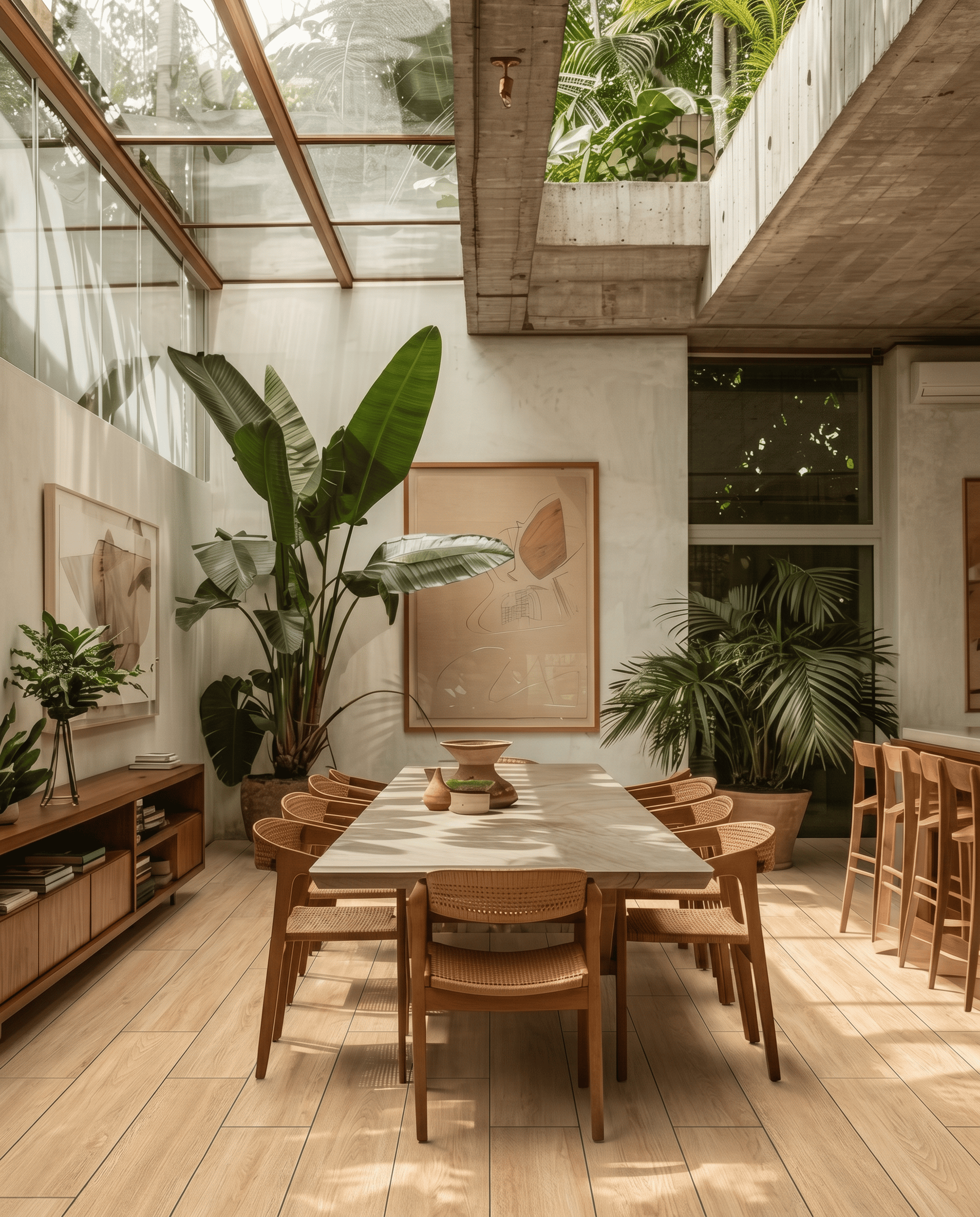
Wood-look porcelain tiles have become one of the strongest flooring options for homes that need warmth without sacrificing performance. They give a room the visual softness associated with timber, while offering the practical benefits of porcelain: durability, water resistance, easy cleaning and strong performance in high-traffic areas.
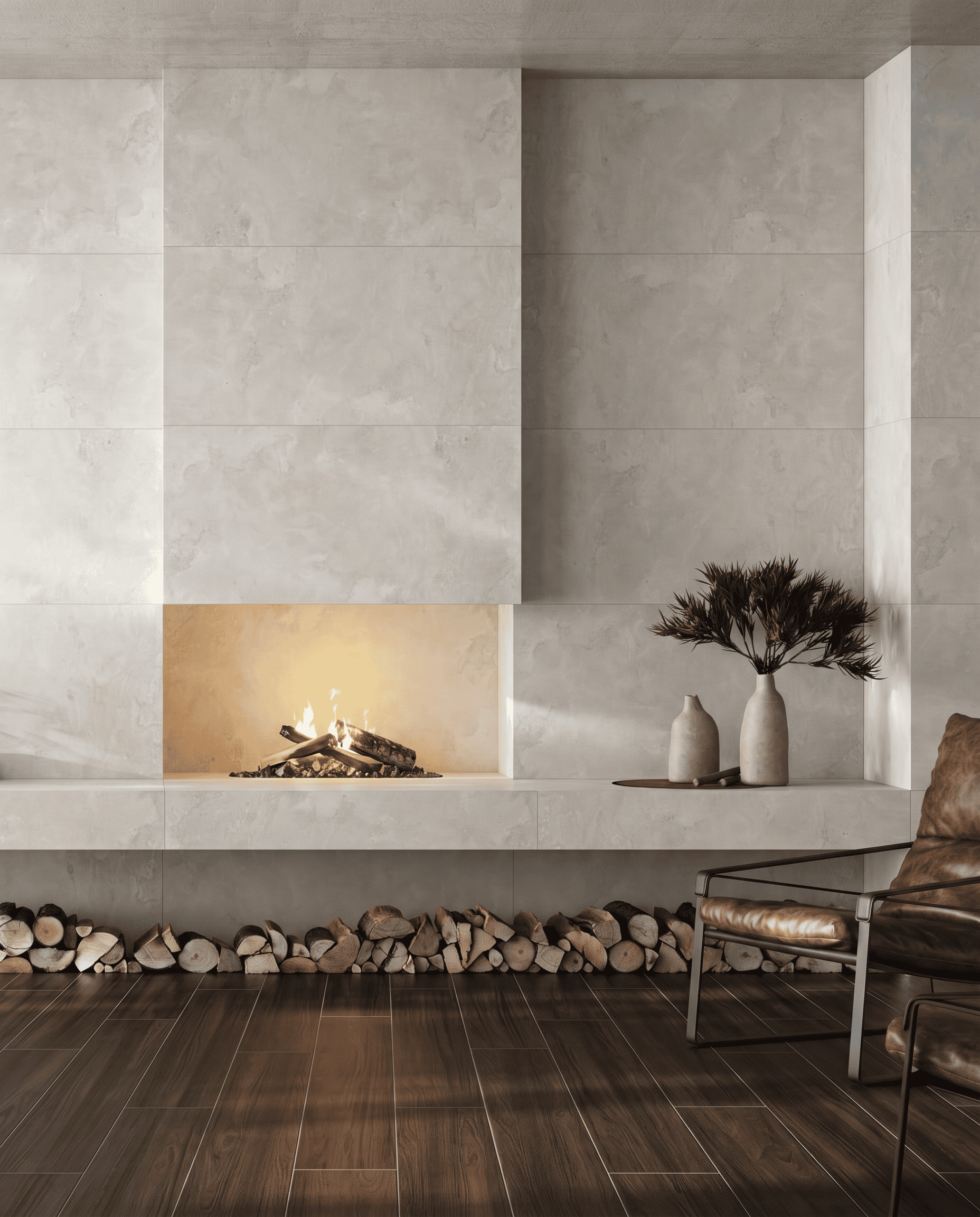
As floor tiles, they are particularly useful because they can carry a visual language through multiple rooms. A wood-look porcelain floor can move from an entrance area into a kitchen, dining room, living space and passage without the surface changes that often make interiors feel fragmented. In open-plan homes, that continuity can make the architecture feel calmer and more resolved.
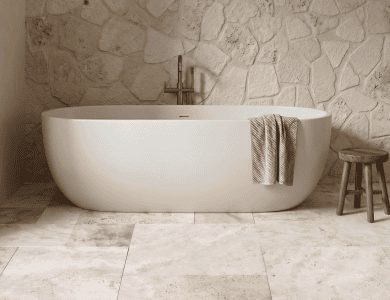
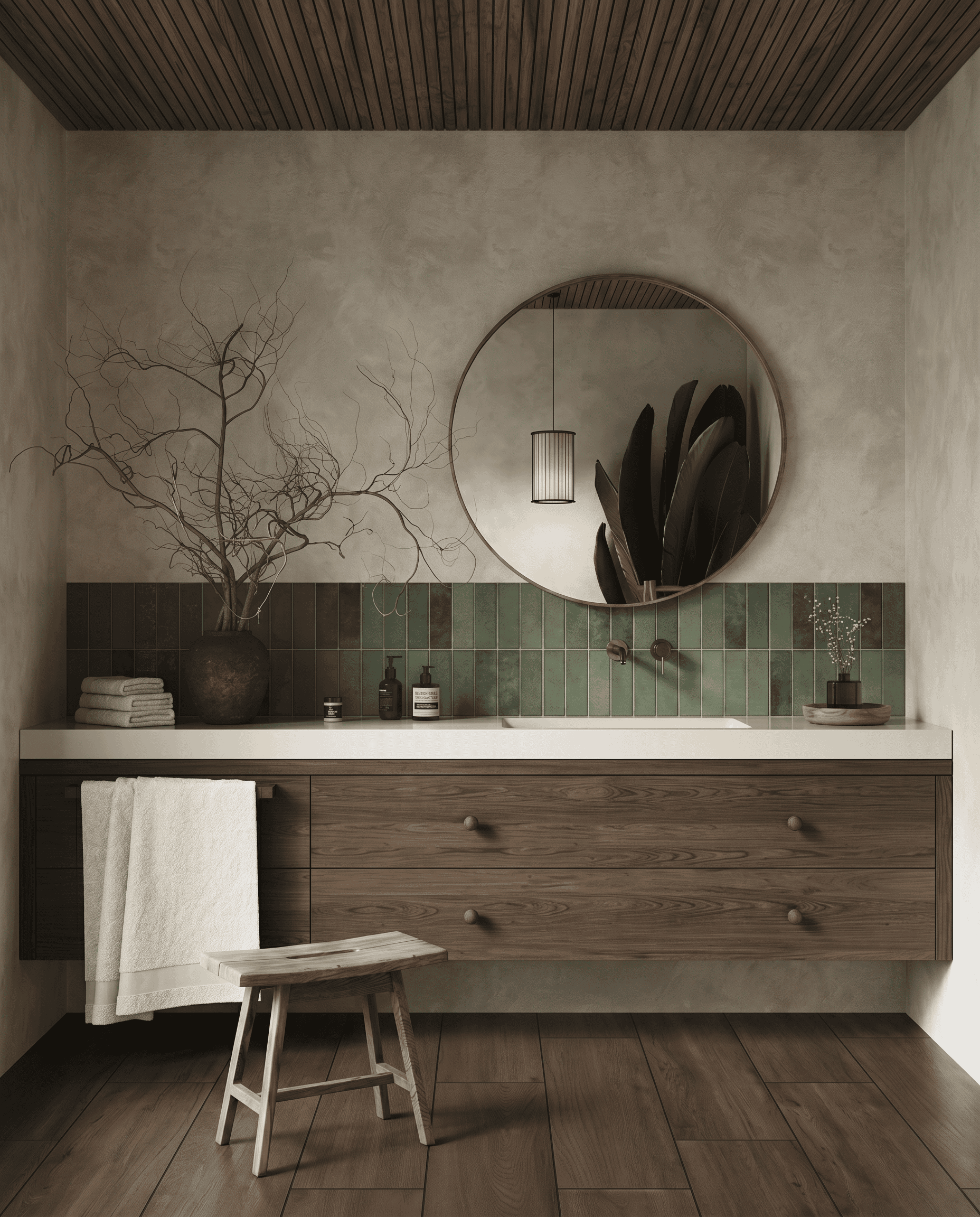
As bathroom tiles, wood-look porcelain offers something real timber cannot: the warmth of a wood tone in a wet environment. Used on bathroom floors, shower walls, vanity zones or feature walls, it can soften the room without introducing the maintenance risks associated with natural timber in high-moisture spaces.
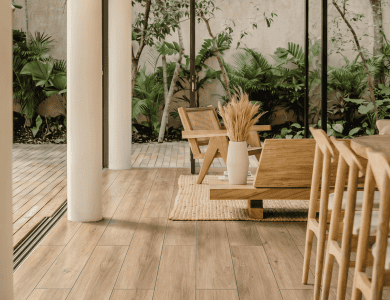
As outdoor tiles, where the correct slip-rated finish is available, wood-look porcelain can also support the indoor-outdoor flow that is so important in many South African homes. Matching interior and exterior finishes allow the same visual language to move from living spaces onto covered patios, terraces and pool surrounds, while still respecting the performance needs of each area.
That combination is why the category has grown up so quickly. It does not ask clients to choose between warmth and practicality. It gives them a way to hold both, provided the range, finish and installation are selected properly.
Where wood-look porcelain performs best
The strongest applications for wood-look porcelain tiles are the ones that play to what the material does well, rather than asking it to behave exactly like timber. That distinction matters.
Some of the areas where it consistently performs include:
- Open-plan living and dining spaces: A continuous wood-look porcelain tile floor brings warmth and rhythm to a large room without the maintenance demands of real wood.
- Kitchens: Few materials make more sense underfoot in a working kitchen. Wood-look porcelain handles spills, foot traffic and heat in a way timber often cannot.
- Bathrooms: This is where the category arguably outperforms wood entirely. Wood-look porcelain bathroom tiles bring timber tone into a wet environment that real wood is not designed for.
- Indoor-outdoor transitions: Many wood-look porcelain ranges are produced in matching internal and external finishes, allowing a single visual language to flow from interior spaces onto patios, pool surrounds and terraces.
- High-traffic homes: Families, pets and busy households are some of the strongest use cases. The material wears well, cleans easily and does not need to be babied.
- Feature walls and patterned areas: Chevron and herringbone wood-look formats can lift a hallway, powder room, bathroom wall or feature zone with the same design discipline once associated with parquet flooring, but with far less complexity.
The unifying principle is that wood-look porcelain rewards continuity. The more space it is given to behave as a unified surface, the more architectural it feels.
The honest considerations
As with any material, the conversation is more useful when the trade-offs are named honestly.
Wood-look porcelain does not feel exactly like real wood underfoot. It is harder, cooler in winter, and lacks the slight give that timber has. For many clients, that is part of the appeal, because it also means the floor will not dent, scratch, warp, fade or need refinishing in the same way. But it is worth understanding in advance, especially in spaces where bare feet, comfort and warmth are part of the brief. Underfloor heating resolves much of this, and pairs particularly well with porcelain.
Quality also varies significantly across the category. A lower-grade wood-look tile will reveal itself quickly through repetitive pattern, flat tone, weak edges and a printed surface that does not interact convincingly with light. A well-produced range, particularly from the European manufacturers WOMAG works with, will read with the depth and variation expected from a premium surface and will hold that quality at scale.
Installation matters too. Plank-format porcelain tiles have specific requirements around substrate preparation, jointing, layout direction and grout selection. A good tile installed without care can lose much of what made it worth specifying. This is especially important with long planks, chevron patterns and larger areas where alignment, spacing and direction become highly visible.
These are not reasons to avoid the material. They are reasons to specify it properly.
Plank size and format change everything
Within the category, the format decision is one of the most important and one of the most underestimated.
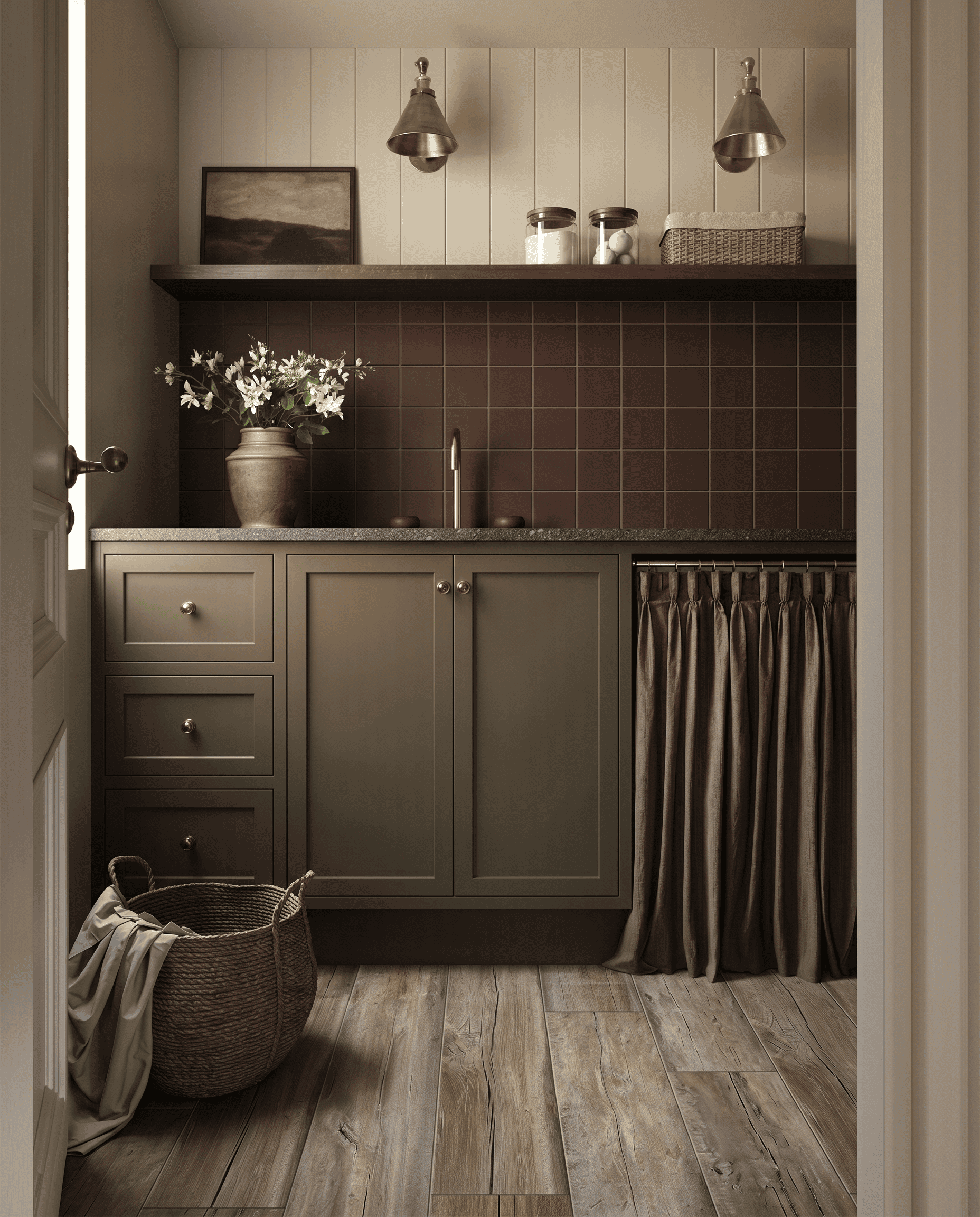
Long, narrow wood-look porcelain planks such as 1200mm by 200mm read as the most timber-like, and tend to suit residential interiors particularly well. The proportion is familiar, and the eye accepts it as a wood floor more readily than wider or shorter formats. In living areas, bedrooms, passages and open-plan spaces, this format often gives the most natural result.
Larger formats, such as 1200mm by 600mm, behave differently. They read as more architectural, more contemporary and less directly imitative of timber. In the right project, particularly more minimalist or commercial spaces, that can be a strength. The surface becomes less about recreating a timber board and more about using wood tone as part of a broader porcelain design language.
Chevron and herringbone cuts shift the conversation again. They are no longer being read only as wood floors, but as patterned, designed surfaces. In a hallway, powder room, bathroom feature wall or selected living area, that pattern becomes part of the design rather than a backdrop to it.
None of these formats is universally better. The right format depends on the architecture, the scale of the space, the way the room will be used, and the role the floor or wall is being asked to play in the wider scheme.
Tone, species reference and how a wood-look tile reads
Wood-look porcelain is produced in a wide tonal range, often referencing specific timber species. Pine, oak, ash, walnut, wenge and bleached or limed finishes all behave very differently in a room.
Lighter tones, such as ash, pale oak and bleached finishes, open up a space and pair well with minimalist or Scandinavian-influenced interiors. They are particularly useful in smaller rooms, bathrooms, compact apartments or homes that prioritise natural light.
Mid-tones, including warmer oaks and honey-toned planks, are some of the most versatile. They tend to suit a wide range of architectural styles and work well in kitchens, living areas and homes where the flooring needs to feel warm without becoming visually heavy.
Darker tones, such as wenge or smoked-finish ranges, bring weight, drama and a more grounded feel. They work especially well in larger spaces, more sculptural interiors or rooms where contrast is part of the design intention.
The choice is not only aesthetic. Tone also influences how the floor interacts with cabinetry, joinery, stone selections, bathroom fittings and wall finishes. A wood-look porcelain tile that fights the rest of the palette can quietly undermine an otherwise well-considered scheme. One that complements it can hold the entire room together.
Why finish matters as much as colour
Finish is the part of the wood-look porcelain decision that often gets overlooked.
A matt finish reads closest to natural timber and is generally the strongest choice for residential floor tiles. It gives the surface a quieter, more natural character and works well in living areas, kitchens, bedrooms and passages.
A textured finish adds tactile depth, suits more rustic or characterful interiors, and can also be useful for areas where slip resistance matters. This becomes particularly important in bathrooms, covered patios, pool surrounds and outdoor applications.
Lappato and semi-polished finishes bring more light into the surface and can feel more contemporary, although they usually read further from real wood. They may suit certain architectural projects, but they need to be considered carefully in relation to the room, the lighting and the desired level of reflectivity.
In bathrooms and outdoor spaces, slip rating becomes part of the decision. Many of the best ranges are produced with matching internal and external finishes specifically so that a single visual language can run from an interior space to a pool surround or patio without compromising on safety underfoot.
Why tile selection matters more than a screen can show
Wood-look porcelain is one of those materials that does not photograph the way it lives. A sample on a screen, or even a single tile in hand, cannot show how the plank will read across a full floor, how the natural variation between tiles will behave, or how the surface will respond to light through the day.
This matters because the quality of wood-look porcelain is revealed at scale. The number of tile faces, the subtlety of the grain, the relationship between the base tone and the printed movement, the edge quality and the finish all become more visible once the material is repeated across a large surface.
It is also why tile selection cannot be reduced to choosing a colour from a photograph. A warm oak-look plank may feel calm in one room and too yellow in another. A pale ash-look tile may open up a bathroom beautifully, but feel too cool against certain cabinetry. A darker wenge-look porcelain may look refined in a showroom display, but require enough natural light and scale to work well in a home.
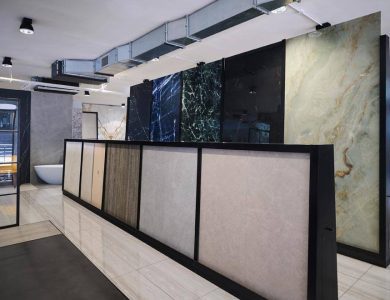
At WOMAG, this is where the showroom conversation becomes practical rather than abstract. Clients can compare wood-look porcelain tiles in different tones, formats and finishes, place them alongside stone, cabinetry and bathroom selections, and understand how the material will behave in the application they have in mind.
Why showroom guidance still matters
Wood-look porcelain has become easier to trust as a category, but it still needs to be selected with care. The difference between a good result and an average one often sits in decisions that are easy to underestimate: plank direction, grout colour, layout pattern, tile format, finish, slip rating, transitions between rooms, and the relationship between the floor and the rest of the material palette.
Seeing a range laid out at scale, in different formats, alongside other surfaces being considered, makes the decision clearer in a way online browsing cannot replicate. It is also where the more practical questions get resolved: whether the tile should run lengthways through a passage, how it should meet skirting or joinery, whether the same range can continue outside, and whether a matt, textured or external finish is right for the specific space.
That is the difference between selecting a wood-look porcelain tile and specifying it well.
A category worth taking seriously
Wood-look porcelain has moved past the point where it needs to justify itself. The category has matured. The technology has caught up with the design ambition. The best ranges available today are not imitating timber so much as reinterpreting it in a more practical, more architectural form.
For many South African homes, particularly those with open-plan living, indoor-outdoor flow, family-paced routines, bathrooms that need warmth, or kitchens that need durability, wood-look porcelain tiles are one of the most considered floor and wall decisions a project can make.
FAQ Block
Are wood-look porcelain tiles better than real wood flooring?
Not better or worse, but different. Wood-look porcelain tiles offer easier maintenance, strong water resistance, no risk of warping or fading, and excellent durability in high-traffic homes. Real wood offers natural warmth underfoot and the patina only timber can develop. The right choice depends on how the space will be used and what is being asked of the floor.
Can wood-look porcelain tiles be used in bathrooms and kitchens?
Yes, and these are some of the strongest applications for the material. Porcelain is unaffected by water, easy to clean and far more practical in wet or working environments than real timber. Many wood-look porcelain ranges also offer slip-rated finishes suitable for bathrooms, pool surrounds and outdoor use.
What plank size should I choose for wood-look porcelain tiles?
That depends on the space and the design intention. Long, narrow planks such as 1200mm by 200mm read closest to real timber and suit many residential interiors. Larger formats feel more contemporary and architectural. Chevron and herringbone cuts work particularly well in feature areas, bathrooms and selected floor zones. Seeing the formats in person makes the decision significantly easier.
Will the pattern repeat be visible across a large floor?
In lower-grade ranges, yes. In well-produced wood-look porcelain tiles from leading European manufacturers, multiple plank faces and natural-looking variation are engineered into the range specifically to reduce visible repetition. The quality of the range makes a significant difference here.
Are wood-look porcelain tiles suitable for outdoor spaces?
Many ranges are produced with matching internal and external finishes, which allows the same visual language to extend from indoor floors to patios, pool surrounds and terraces. This is one of the strongest reasons wood-look porcelain has become so popular in South African homes with indoor-outdoor flow.
Do wood-look porcelain tiles need special installation?
They need careful installation rather than unusual installation. Plank-format porcelain requires good substrate preparation, considered layout direction, appropriate jointing and careful grout selection. These details have a major effect on how natural and resolved the finished floor or wall will feel.
Visit a WOMAG showroom in Cape Town or Johannesburg to see wood-look porcelain tiles in person, compare plank formats, tones and finishes side by side, and speak to a consultant about which range will suit your project, your architecture and the way the space will actually be lived in.