Marble, quartzite, granite or porcelain? On paper, it sounds like a straightforward comparison. In practice, it is rarely that neat. A kitchen surface does more than finish a room. It has to carry the visual weight of the space, stand up to daily use, and still feel right years after installation. That is where many decisions become more complex than expected. A material may look beautiful in isolation, then feel wrong once the kitchen is built around it. Another may seem practical at first glance, but lack the depth or presence the room needs. This is why choosing a kitchen surface is not simply about what looks good on a sample board. It is about fit. Fit between the material and the architecture, between the finish and the way the kitchen will be used, between what a client is drawn to and what the project genuinely needs.
At WOMAG, these conversations happen every day in our Cape Town and Johannesburg showrooms. Some clients arrive convinced they want marble, then realise their kitchen really calls for quartzite or porcelain.
Others start by asking for the hardest-wearing option, only to discover they want more movement, warmth or material character than they expected. The right answer is rarely generic. It sits in the detail.
Why the right kitchen surface is about more than appearance
In most kitchens, the surface becomes the room’s visual anchor. It influences how cabinetry reads, how light moves across the space, and whether the overall atmosphere feels warm, sculptural, restrained or more expressive. But unlike a feature wall or a quieter bathroom application, a kitchen asks a great deal from a surface. It deals with heat, preparation, spills, cleaning, movement and constant use. The material has to live well, not just photograph well. That is why the best surface choices tend to come from a more honest set of questions:
- How heavily will the kitchen be used?
- Is low maintenance a priority, or is some ageing acceptable?
- Does the design call for strong movement, softness, consistency or restraint?
- Is the surface meant to be a dramatic focal point, or a quieter architectural base?
- Will the material still feel right once fabrication details, seam placement and everyday use come into the picture?
Those questions matter more than trends do.
Marble for kitchens: beautiful, but best chosen with intent
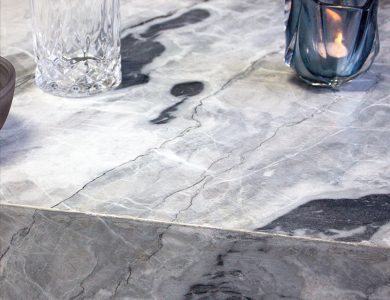
There is a reason marble remains one of the most desired materials in interior design. It brings softness, depth and fluidity into a space in a way few surfaces can. The veining feels natural rather than repetitive. Even quieter marbles tend to carry a sense of elegance that can shift the entire mood of a kitchen.
But marble is not the default answer for most kitchens. And this is where surface selection needs some honesty. As a naturally porous stone, marble is more susceptible to staining and etching than harder materials.
In kitchens where cooking is frequent, surfaces are heavily used, and maintenance needs to be minimal, that can become a frustration rather than a feature. For some clients, the ageing of marble is part of its appeal. It gathers life. It softens further over time. In the right home, that patina can feel entirely appropriate. In other kitchens, it is simply not the most practical choice.
At WOMAG, marble is usually best approached as a more considered, design-led material. It can work beautifully on a feature island, a lower-use kitchen, a splashback, or in spaces where visual atmosphere matters more than absolute resilience. But where durability and ease of maintenance are priorities, quartzite or porcelain will often be the stronger recommendation. That is not a compromise. It is a better fit.

Quartzite for kitchens: natural character with more day-to-day resilience
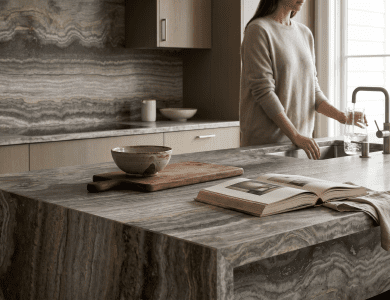
Quartzite has become one of the most compelling kitchen materials for exactly that reason. It offers the movement, richness and individuality many clients want from natural stone, but with greater resilience in everyday use.
This is often where the conversation becomes more interesting. Clients who are drawn to the expressive quality of marble, but want a surface that feels less vulnerable in a working kitchen, often find quartzite to be the more complete answer. It holds its own visually. It can still bring drama, softness or texture depending on the slab selected. But it generally performs better in busier kitchens where wear, preparation and regular use are part of daily life.
- Family kitchens
- High-use islands and worktops
- Homes where the kitchen is the centre of the day
- Projects that want natural stone without a high-maintenance profile
Not all quartzite reads the same, which is why showroom selection matters here. Some slabs are bold and directional. Others are quieter and more architectural. Choosing quartzite well is less about the label and more about the specific slab, its composition, and where it will sit within the room.

Granite for kitchens: proven, durable and still highly relevant
Granite has remained a trusted kitchen surface for decades because it performs consistently and wears well. That longevity is not accidental. Granite suits kitchens that need strength, practicality and natural material integrity without becoming too precious. It works particularly well in spaces where the client wants confidence in the surface over the long term, whether in a family home, a renovation, or a more hard-working build.
A lot depends on the granite itself. Some are more restrained and grounded. Others carry stronger patterning and visual energy. The category is broader than people often assume. Chosen well, granite can feel substantial, elegant and quietly confident. It does not need to announce itself loudly to do its job well. For clients prioritising durability, ease of living and the authenticity of natural stone, granite remains a strong answer.
Porcelain for kitchens: controlled, low-maintenance and increasingly in demand
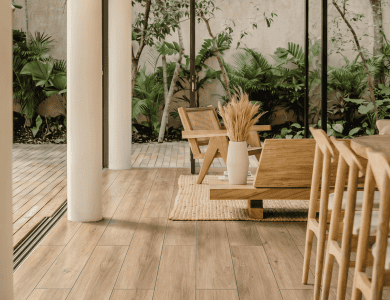
Porcelain is no longer an afterthought in the kitchen conversation. In many contemporary projects, it is one of the most relevant options on the table. Its appeal lies in a different kind of strength. Where natural stone is valued for variation, porcelain offers control. It provides visual consistency, a lighter maintenance profile, and a cleaner sense of precision.
For some kitchens, especially those shaped around minimalism, sharp detailing or a calmer architectural language, that can be exactly the right move. It also answers a very real client need. Many homeowners want a surface that performs well, feels contemporary, and does not ask for too much in return. Porcelain speaks directly to that. It is particularly well suited to:
- Modern kitchens with clean-lined detailing
- Clients prioritising low maintenance
- Projects where visual consistency matters
- Spaces where a more controlled finish supports the architecture better than heavy natural variation
Porcelain is not trying to imitate natural stone selection logic. It solves a different brief. And in the right kitchen, it can be the most intelligent choice in the room.
Which kitchen surface is right for your space?
This is usually the question clients ask first. It is also the one that becomes clearer once the project is considered properly. If the kitchen is being shaped around visual richness, softness and expressive material character, marble may have a place, provided the client is comfortable with the maintenance that comes with it. If the aim is to retain the individuality of natural stone while improving everyday resilience, quartzite is often one of the strongest options. If the priority is proven durability, natural strength and long-term practicality, granite continues to make sense.
If the brief leans toward clean architectural lines, consistency and ease of living, porcelain may be the better answer. The strongest decisions usually come from understanding four things clearly:
- How the kitchen will actually be used
- What level of maintenance is realistic
- What role the surface plays in the wider design scheme
- Whether the chosen material still makes sense once fabrication and installation are taken into account
That final point is often the one people underestimate.
Why slab selection, seam planning and fabrication details matter
Choosing a material category is only the beginning. The real decision often sits in the execution. With natural stone in particular, the exact slab matters enormously. One may feel calm and balanced. Another from the same family may be far bolder, denser or more directional. That difference can completely change the mood of the kitchen. Then fabrication enters the picture.
This is where showroom expertise becomes more than helpful. It becomes practical. Veining direction, cut placement, seam positioning, edge profiling and how the surface will transition across islands, splashbacks or adjoining areas all affect the final result. A beautiful slab can lose impact if those details are handled poorly. A well-selected slab, planned properly, can transform the entire room. That is part of what WOMAG helps clients think through. The conversation is not only about what material looks appealing in principle.

It is about whether that specific slab suits the application, whether the movement works with the scale of the island, whether the seam can be handled cleanly, and whether the final installation will still feel resolved once everything is in place. That is the difference between choosing a surface and choosing it well.
Why seeing the actual surface still matters
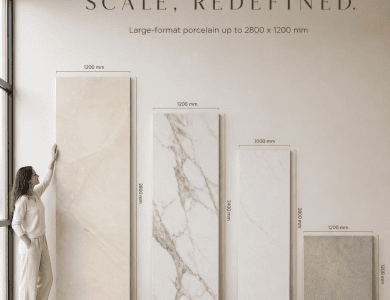
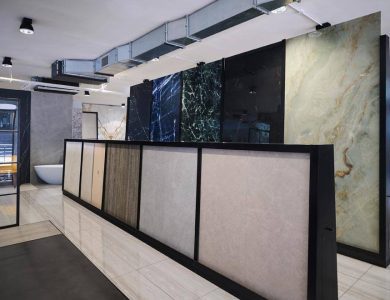
Samples are useful. They help narrow the field. But they are not the final truth of a material. A sample may suggest colour and finish, but it cannot reliably show how a slab will read across a full island, how the veining will travel, or where the visual weight of the material sits. In porcelain, viewing the full surface still helps with tone and consistency. In natural stone, it is even more important. This is why clients are encouraged to see slabs and surfaces in person before making a final decision. In a kitchen, the worktop often becomes the centre of gravity for the room. Getting that decision right changes everything around it. At WOMAG’s showrooms in Cape Town and Johannesburg, clients can compare materials properly, assess their scale and movement, and have a more informed conversation about what will work for their project, not just in theory, but in the realities of fabrication and installation too.
A more informed way to choose
The best kitchen surfaces are not chosen by trend, and they are rarely chosen by appearance alone. They are chosen by understanding how the material will behave, how the kitchen will be lived in, and how the final surface needs to perform once the project moves from moodboard to built space. Marble, quartzite, granite and porcelain each have their place. None is universally superior. The value lies in selecting the one that genuinely fits the architecture, the maintenance expectations and the life of the room. That is where expert guidance matters most.
FAQ
Is marble a good choice for kitchen countertops?
Marble can work beautifully in kitchens, but it is not always the most practical choice for high-use spaces. Because it is more porous than harder materials, it is more susceptible to staining and etching. It is often best suited to more design-led kitchens or selective feature applications where visual character is a priority.
Is quartzite better than granite for kitchens?
Quartzite and granite can both work very well in kitchens, but they suit different priorities. Quartzite is often chosen for its natural movement and stronger visual resemblance to some marbles, while still offering good durability. Granite is valued for its proven strength, practicality and long-term performance.
Is porcelain better than natural stone for a kitchen?
Porcelain is not necessarily better, but it can be a better fit for certain kitchens. It offers low maintenance, consistency and a more controlled finish. Natural stone brings individuality, depth and variation. The right choice depends on how the kitchen will be used and what kind of material character the space needs.
Why is it important to view the full slab before choosing stone?
Viewing the full slab helps you assess veining, movement, tonal variation and overall composition. It also helps with practical decisions around cut placement, seam planning and how the material will look once installed. A small sample cannot show all of that.
Which kitchen surface is easiest to maintain?
Porcelain is often one of the easiest kitchen surfaces to maintain. Granite and quartzite can also perform very well depending on the material and application. Marble generally requires a more considered maintenance approach.
Visit a WOMAG showroom in Cape Town or Johannesburg to compare marble, quartzite, granite and porcelain in person, and speak to a consultant about the surface that best suits your kitchen, your project and the way the space will actually be used.