Beyond 1200 × 600
1200 × 600 mm is still widely thought of as a large-format tile. Within WOMAG’s current range, however, it has become a familiar, widely used format rather than the upper limit.
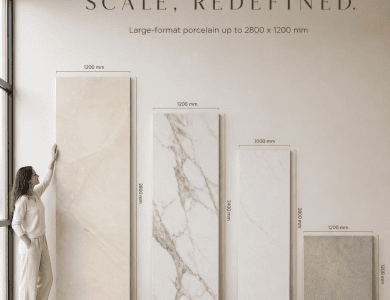
The scale now extends much further. Depending on the selected porcelain range, clients can consider 1200 × 1200 mm, 1500 × 750 mm, 2000 × 1000 mm and 2400 × 1200 mm tiles, with some options reaching 2800 × 1200 mm.
These dimensions change more than the size of each piece. They change how a tiled surface is read and how it relates to the room around it.
What larger formats bring to a space
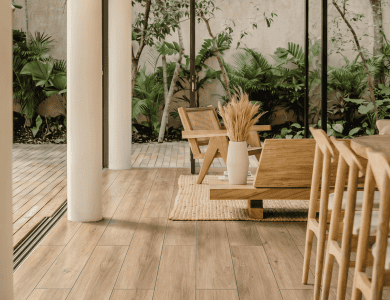
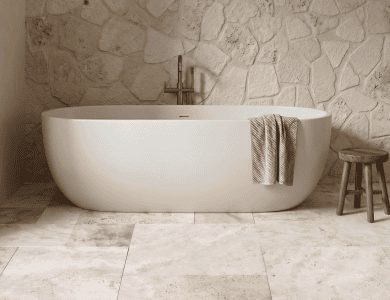
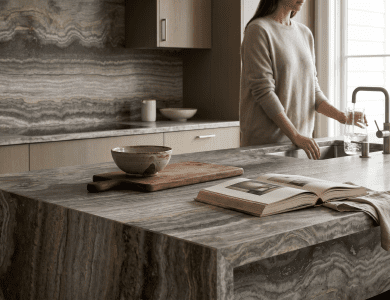
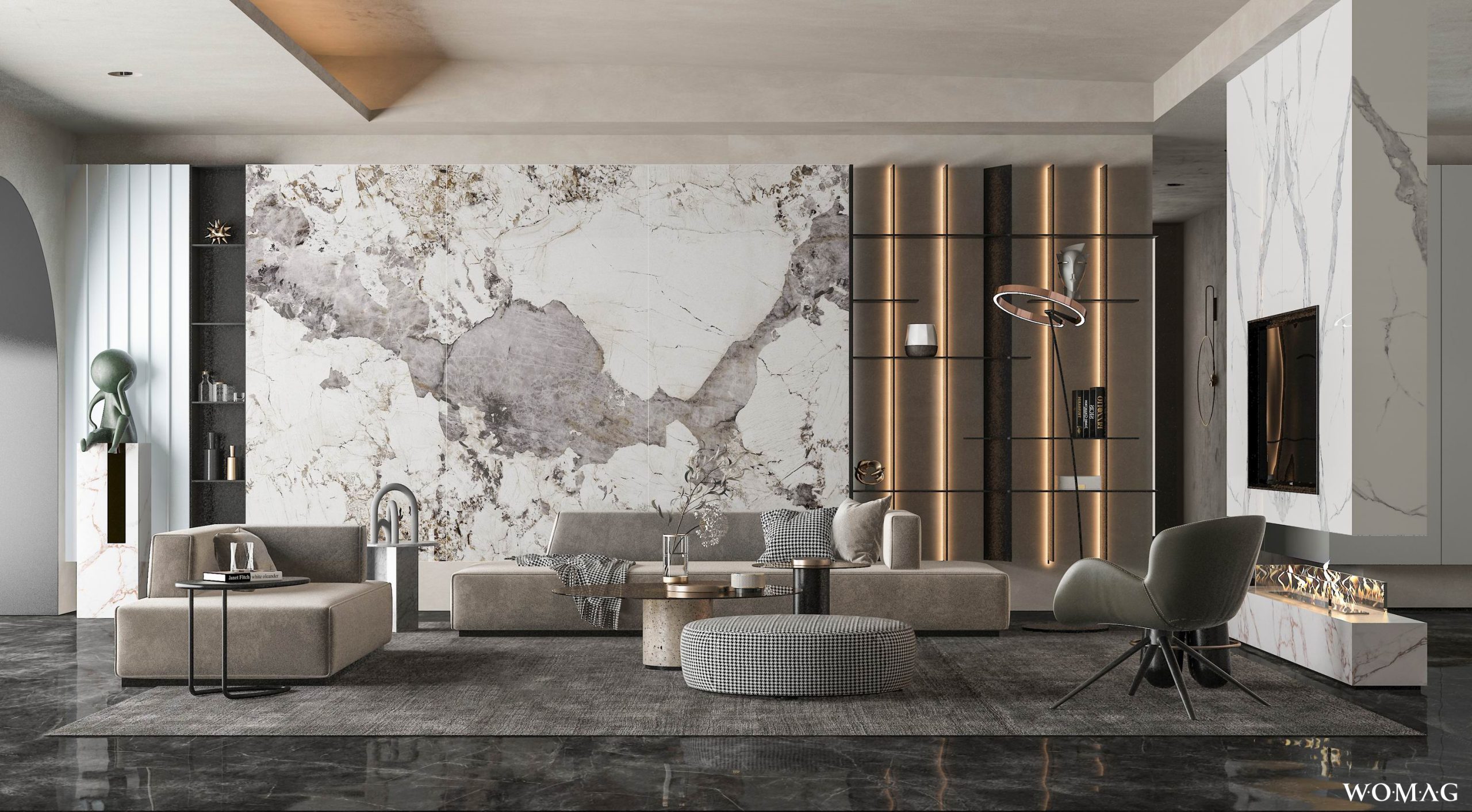
The clearest visual difference is a reduction in grout lines. With fewer interruptions, colour and pattern can travel further across a wall or floor. The result can feel calmer, more continuous and more expansive, particularly in open-plan rooms, generous bathrooms and spaces shaped by strong architectural lines.
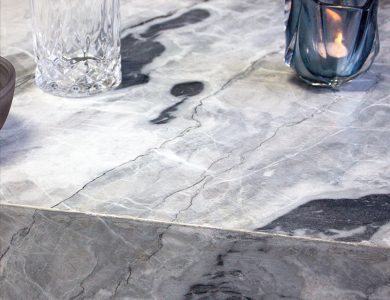
Scale also gives stone, concrete and other surface interpretations room to register. Instead of reading as a repeated grid of individual tiles, a larger format can behave more like a continuous architectural plane. This is where the finish becomes especially convincing: the tile supports the room rather than dividing it into smaller sections.

Scale, proportion and planning
Bigger is not automatically better. A 2400 × 1200 mm tile can look exceptional in one project and feel forced in another.
Start with the room’s proportions and the surfaces to be covered. Ceiling height, wall width, floor area, fixed joinery and sanitaryware all affect how a format will sit. The useful question is not simply which tile is largest, but which creates the best-proportioned layout.
A larger tile may reduce the number of joints, but an awkward layout can introduce narrow cuts or poorly placed breaks. On walls, consider the relationship with vanities, mirrors, niches and fittings. On floors, look at thresholds, room transitions and the direction of the tile. Directional patterns also need to feel balanced across the complete surface.
The wall or floor beneath the tile should be assessed and prepared before installation begins. Larger pieces can make unevenness more apparent, so substrate preparation and layout should be resolved together rather than corrected on site as work progresses.
Consider the practicalities early
As formats increase, access and handling become part of the decision. Doorways, staircases, lifts, corners and working space may influence which size is practical for the site.
It is worth involving an installer experienced with genuinely large-format tiles before the specification is finalised. They can assess access, preparation and installation requirements for the chosen format, while WOMAG’s team can advise on the available sizes, finishes and suitable applications.
See the scale before you specify it
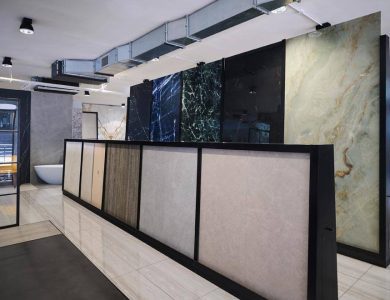
Tile dimensions are easy to underestimate on a product list. Seeing these surfaces in person gives a clearer sense of proportion, pattern and finish.
A WOMAG showroom visit allows homeowners and design professionals to compare formats and consider them against the actual dimensions of the project. Bring plans, measurements and key material references where possible. The discussion becomes far more useful when the tile can be considered as part of the room rather than as an isolated sample.
1200 × 600 mm remains a valuable, versatile format. It is simply no longer the end of the large-format conversation.
FAQ Block
What is considered a large-format tile today?
At WOMAG, 1200 × 600 mm is now a familiar standard size. Larger options include 1200 × 1200 mm, 1500 × 750 mm, 2000 × 1000 mm and 2400 × 1200 mm, with selected porcelain ranges extending to 2800 × 1200 mm.
Do large-format tiles make a room look bigger?
They can create a more expansive feel because fewer grout lines give the surface greater visual continuity. The result still depends on the format, layout and proportions of the room.
What should be considered before choosing a large-format tile?
Consider the room’s proportions, layout, access, substrate and the experience of the appointed installer. Plans and measurements will also help the WOMAG team advise on a suitable format, finish and application.
Visit a WOMAG showroom to compare formats, finishes and applications with the team.