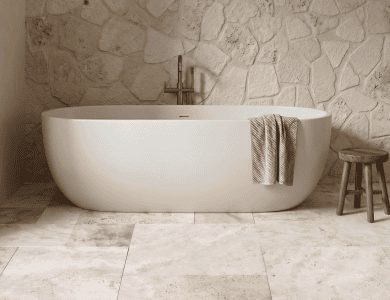
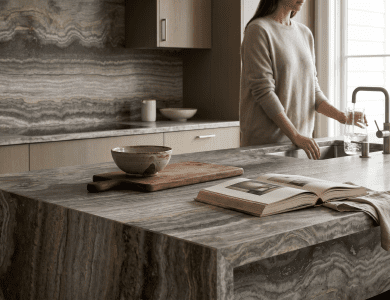
Travertine has quietly become one of the most influential materials in contemporary interior design. Not because it is new, it is one of the oldest stones used in architecture, but because of the way it is being interpreted now. Where it was once associated with the heavier interiors of an earlier era, today it is being used in a more restrained, sculptural and architectural way. The same stone that once read as traditional now feels distinctly current.
That shift has not happened by accident. Travertine offers something many other materials do not. It carries warmth, depth and a softness of tone that feels more grounded than a high-gloss finish, more textural than engineered surfaces, and more humane than the cooler greys that defined the previous decade of interior work. In the right hands, and in the right application, it can change the entire temperature of a room.
For many homeowners and designers, that shift is being led by travertine tiles. Floor tiles, wall tiles, bathroom tiles and indoor-outdoor applications have made travertine more accessible within contemporary projects, without losing the natural stone character that makes it feel premium. Tiles allow the material to work across larger surfaces, quieter rooms and more practical spaces, where a full slab may not always be the right answer.
But like any natural stone, travertine is not a default answer. It rewards considered use. Specified well, it can feel timeless. Specified poorly, it can date quickly or fight the architecture around it. At WOMAG, the question is rarely whether travertine looks beautiful. It almost always does. The more useful question is whether it is the right fit for the project in front of us, and how it should be used to bring out its best.
What travertine actually is, and why that matters
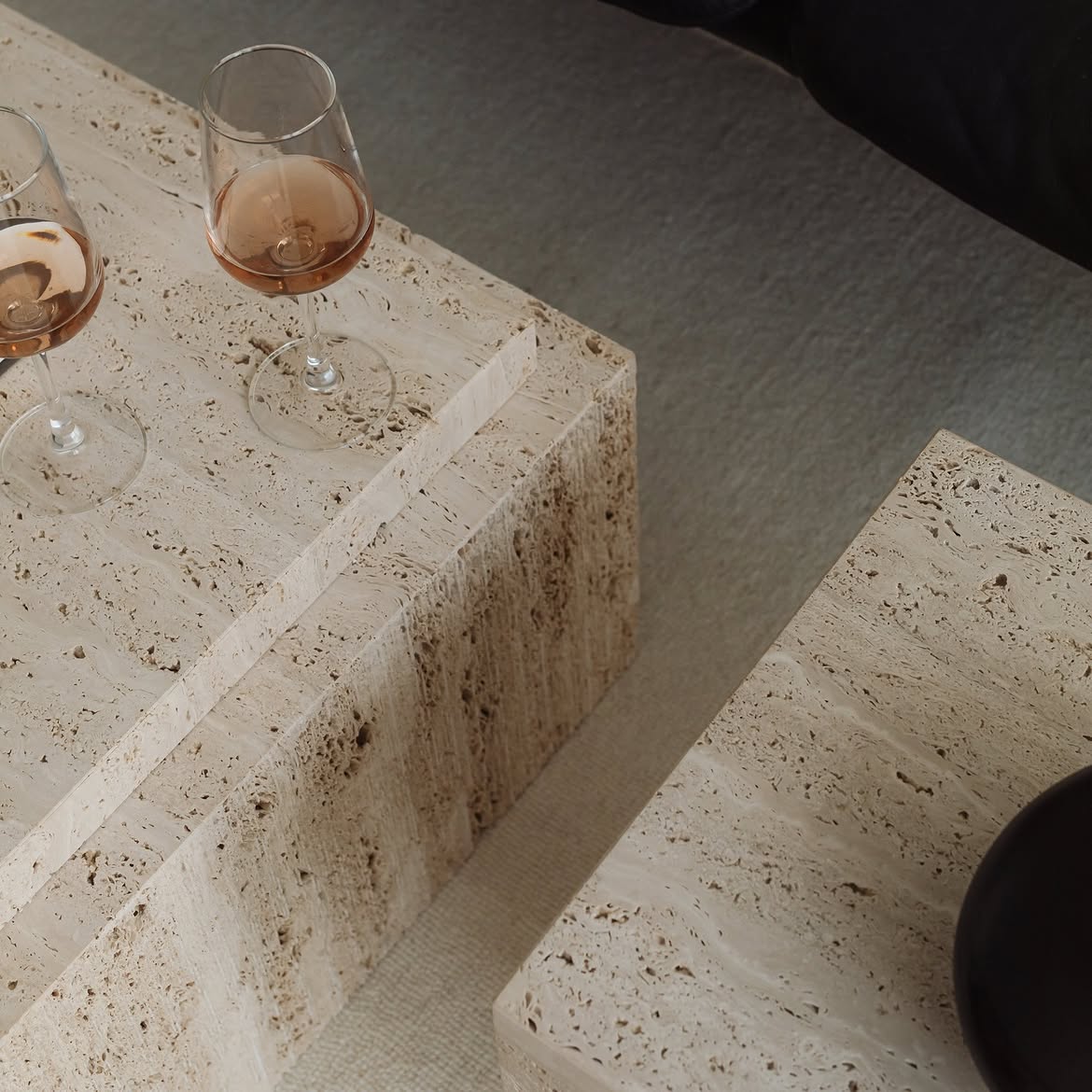
Travertine is a form of limestone created by mineral-rich water depositing layers over time. Those layers are part of what gives the stone its distinctive character. The visible movement, the soft banding, the natural voids that travel through the surface, all of it comes from how the material was formed.
That formation is also what gives travertine its quieter strength as a design material. It does not rely on dramatic veining or contrast to make a statement. Its impact is more atmospheric. It reads as warm rather than cold, soft rather than sharp, textured rather than flat. In a room, that translates into a sense of weight without heaviness, and presence without volume.
Understanding the nature of the stone matters because it shapes every decision around it, from where it is best used, to how it should be finished, to whether travertine tiles or larger slab applications will serve the space better.
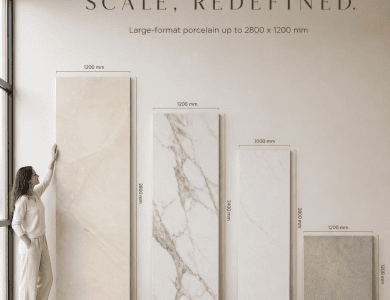
Why scale changes the final design outcome
The current return to travertine is part of a wider movement in interior design toward materials that feel honest, tactile and architecturally grounded. Spaces are being asked to feel calmer. Surfaces are being asked to feel more human. Designers and homeowners are moving away from finishes that look perfect under photography and toward materials that age well, sit quietly and bring genuine character to a room.
Travertine answers that brief almost perfectly. It is sculptural without being loud. It is warm without being rustic. It carries history without feeling old-fashioned. In contemporary South African projects, particularly in homes that prioritise natural light, generous proportions and a sense of restraint, travertine has become a defining choice.
It is being used in ways that would have seemed unusual a decade ago. Travertine floor tiles flowing from living areas to terraces. Bathroom wall tiles wrapped around showers and vanities. Natural stone tiles used for quiet feature walls. Slab walls. Monolithic vanities. Sculptural islands. Wrapped fireplaces. The stone is no longer being treated as a decorative finish. It is being used as architecture.
What you can only assess when viewing the full slab
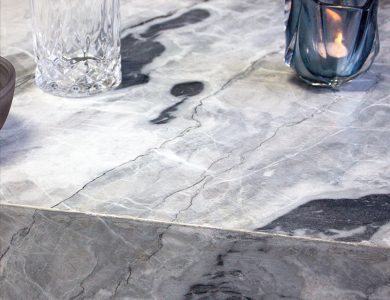
When you view the full slab in person, you can assess things that a sample simply cannot show:
- how the veining moves across the slab
- where the quieter and more expressive sections sit
- whether the composition feels balanced at scale
- how the slab may read once cut into islands, splashbacks, vanities or wall panels
- whether the material suits a bold statement application or a more restrained one
- how much continuity can be kept across larger surfaces
This matters because different parts of the same slab can behave very differently. It also matters practically. If a client wants the strongest movement across the island, or a quieter section for a vanity, that needs to be decided before fabrication starts, not afterwards.
Why travertine tiles are so popular in contemporary interiors
Travertine tiles have become one of the strongest ways to bring the material into a home because they balance visual impact with practical flexibility. They can cover large areas without overwhelming the room, they work across floors and walls, and they allow the natural variation of the stone to build gradually across a surface.
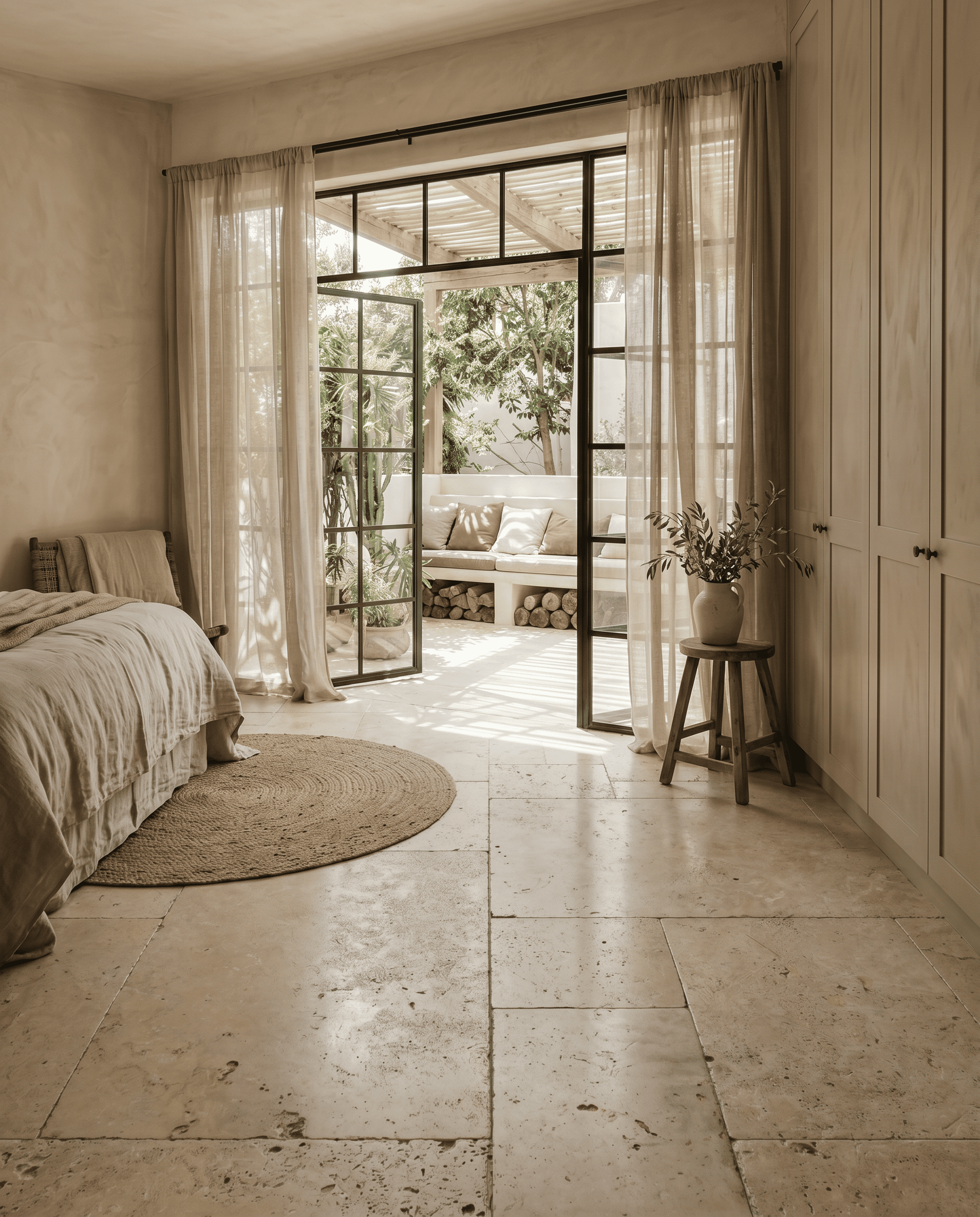
As floor tiles, travertine brings a calm, continuous foundation to a space. The tone is warm without feeling heavy, which makes it especially useful in open-plan homes, entrance areas, bathrooms and living spaces where the floor needs to support the architecture rather than dominate it.
As wall tiles, travertine adds texture and depth without the visual busyness of a heavily patterned surface. It can make a bathroom feel more considered, give a passage or stairwell more architectural weight, or turn a fireplace or feature wall into something quieter and more permanent.
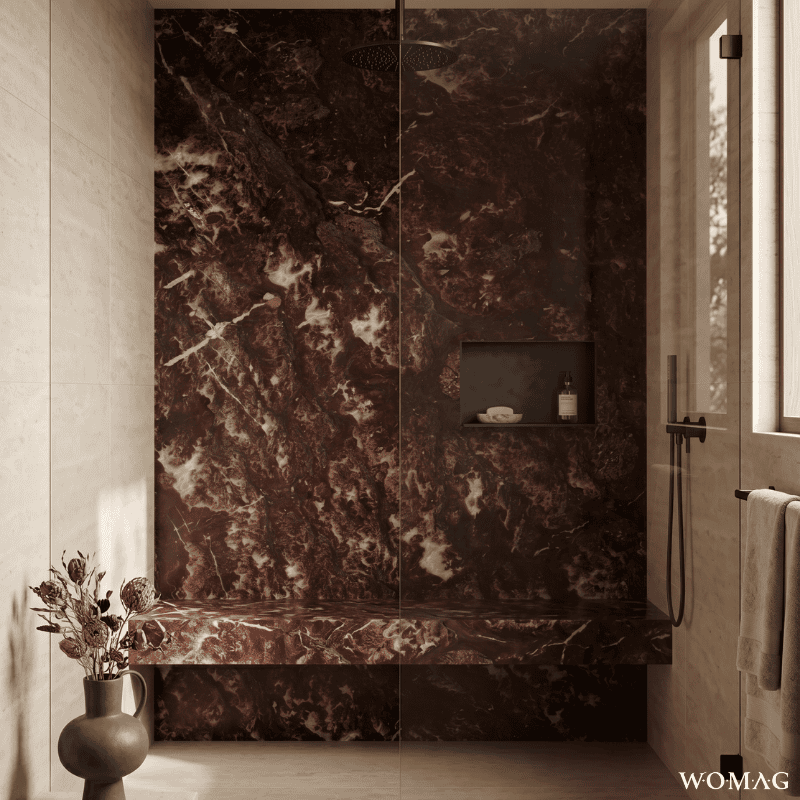
In bathrooms, travertine tiles are particularly effective because the material works naturally with water, light and softer finishes. Used across bathroom floors, shower walls, vanity surrounds or niche details, travertine can create the spa-like quality many clients are looking for, but with more natural character than a flat, manufactured surface.
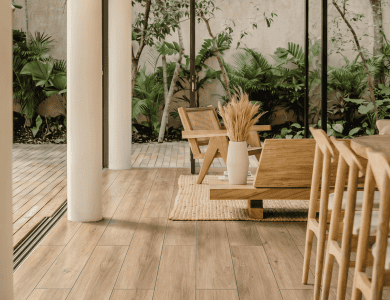
Travertine tiles also suit the South African preference for indoor-outdoor flow. In the right finish and application, they can help connect interior floors with covered patios, terraces or pool-adjacent spaces, creating a more continuous relationship between the home and its outdoor areas. The result feels less like a surface choice and more like part of the architectural language.
Where travertine works best
Travertine is a versatile material, but it does not suit every application equally. The strongest projects tend to share a similar instinct: they let travertine carry weight in the design rather than asking it to sit in the background.
Some of the applications where it performs particularly well include:
- Bathrooms: Travertine bathroom tiles, walls and vanities can give a bathroom a spa-like quality that few other materials achieve. The softness of the tone works beautifully with natural light, water and warmer metals.
- Flooring: Travertine floor tiles bring a calm, continuous foundation to a home. Used at scale, they work particularly well in spaces that flow between indoor and outdoor environments.
- Wall tiles and feature walls: Travertine wall tiles can ground a living space, bathroom or passage in a way that paint or plaster cannot. The texture adds visual depth without competing with the rest of the room.
- Feature walls and fireplaces: A travertine wall or fireplace surround can become a strong architectural element, especially where the design calls for warmth, texture and restraint.
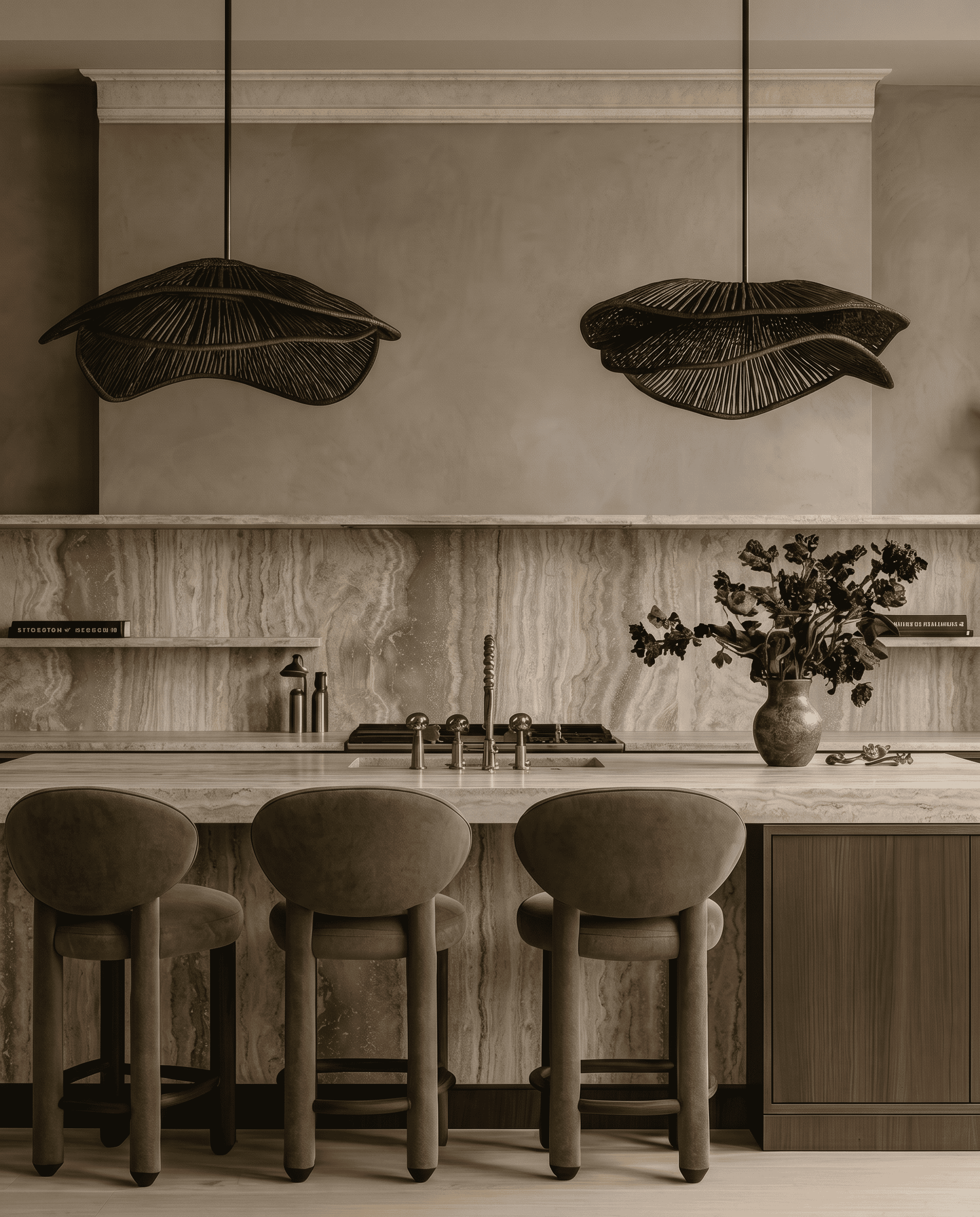
- Kitchen worktops, islands and splashbacks: In kitchens where the design favours a softer, more architectural palette, travertine can offer a quieter alternative to high-movement marble.
- Furniture and built-in elements: Travertine plinths, basins, side tables and bench surfaces have become a signature of considered contemporary interiors.
The unifying thread is that travertine tends to perform best when it is given enough surface area to be itself. As a small accent it can feel underused. As a defining material, whether in tiles or slabs, it becomes architectural.
The honest considerations
Travertine has real strengths, but it also has characteristics worth understanding before specifying it.
It is more porous than denser stones, which means sealing and a considered maintenance approach matter. The natural voids that give travertine its character can be left open for a more textured finish, or filled for a smoother, more uniform surface, and that decision should be made early because it affects everything from feel to maintenance to overall mood.
It is also a softer stone than granite or quartzite, which means it can be more susceptible to scratching and etching in high-use areas. That is not a reason to avoid it. It is a reason to choose the right finish, application and expectations from the start.
In kitchens, travertine can absolutely be used for worktops, islands and splashbacks. The important point is not whether it can be used, but whether the client understands how the material will live over time. For some households, the gentle patina of natural stone is part of the appeal. For others, a harder-wearing stone may be a better fit for heavily worked preparation areas. The right recommendation depends on how the kitchen is used, how much maintenance feels realistic, and what kind of surface character the client wants to live with.
These are not flaws. They are simply part of the material’s nature, and clients who appreciate travertine tend to appreciate the way it lives in. It is a stone that gathers life rather than resisting it.
Honed, polished or filled? The finish changes everything
With travertine, the finish decision is almost as important as the material decision itself.
A polished travertine reads more formal and reflective, closer in mood to traditional marble. A honed finish, which is far more common in contemporary work, brings out the softness and depth of the stone without the sheen. A brushed or textured finish takes it further into tactile, architectural territory, which can be especially effective for floor tiles, wall tiles and indoor-outdoor applications.
Then there is the question of whether the natural voids are filled or left open. Filled travertine offers a smoother, more uniform surface that is easier to maintain and reads more refined. Unfilled travertine retains more of the stone’s natural character and texture, which suits certain interiors beautifully but is a more involved finish to live with.
There is no single right answer. The decision depends on the architecture, the application, the light in the room and the way the space will be used. Travertine bathroom tiles, for example, may need a different finish logic from a sculptural fireplace, a kitchen worktop or a covered patio floor. This is exactly the kind of question that becomes much clearer in a showroom, where finishes can be compared side by side rather than imagined from a sample.
Why tile selection and slab selection both matter
As with any natural stone, the category only tells part of the story. The specific selection tells the rest.
Travertine varies considerably from one piece to the next. Some material is calm and almost monochromatic, with subtle banding that reads as a soft, continuous tone. Other travertine is more directional, with stronger movement and visible layering. Some lean warmer, into honeyed and golden territory. Others sit closer to ivory, stone-grey or a cooler beige.
That variation is part of what makes travertine such a rewarding material to specify, but it is also why selection is so important. With travertine tiles, the tone, format, finish and layout pattern all affect the final result. A larger tile can feel more architectural and continuous. A smaller format may create more rhythm and texture. Cross-cut and vein-cut travertine can also create different visual effects, which matters when the material is being used across a floor, wall or bathroom scheme.
With slabs, the full movement and layering become even more important. A slab that feels right in isolation can read differently once it is placed within a kitchen, a bathroom or a wider architectural scheme. Equally, a slab that seems quiet on first viewing can come alive at scale.
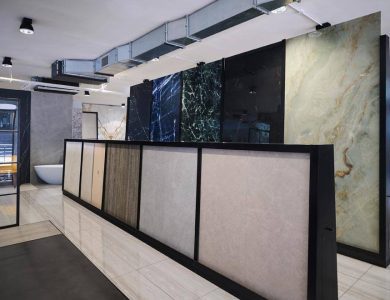
At WOMAG, this is where the showroom conversation becomes practical rather than abstract. Clients can compare travertine tiles, view full slabs, assess tones and finishes, and understand how the material will behave in the application they have in mind. That kind of viewing is difficult to replicate any other way.
Why travertine still rewards a showroom visit
Travertine is one of those materials that does not fully reveal itself through samples or screens. A small piece can suggest the colour and finish, but it cannot show the rhythm of the layering, the way the tone shifts across a slab, or how travertine tiles will read once installed across a full bathroom wall, floor or indoor-outdoor space.
That gap between sample and finished surface is exactly why showroom selection matters. The right travertine for a calm, minimal bathroom is not necessarily the right travertine for a sculptural fireplace, a generous kitchen island or a large-format floor tile installation. Seeing the material at a meaningful scale, in good light, alongside other surfaces being considered, changes the quality of the decision.
It also opens up the practical conversation around tile format, grout lines, finish selection, cut placement, seam planning and how the stone will transition between elements. Those details are often what separate a good travertine installation from an exceptional one.
A material worth specifying carefully
Travertine has earned its current place in contemporary interior design because it offers something genuinely distinctive. It is warm without being soft, architectural without being cold, and timeless without being predictable. In the right project, it can become the defining material of the space.
But its strength sits in how it is used. The applications where travertine performs best are the ones where the material is given the space, scale and finish it deserves, whether that is through travertine floor tiles, bathroom wall tiles, a feature wall, a kitchen worktop, a fireplace surround or a full slab installation.
That is the conversation worth having before specifying. Not whether travertine is beautiful. It almost always is. But whether the right travertine, in the right finish, in the right format and in the right application, has been chosen for the project at hand.
FAQ Block
Are travertine tiles suitable for South African homes?
Travertine tiles work very well in South African residential projects, particularly those that prioritise natural light, indoor-outdoor flow and a more architectural, restrained aesthetic. They pair well with the warmer tones and generous proportions found in many contemporary local homes.
Are travertine tiles good for bathrooms?
Yes. Travertine bathroom tiles can create a warm, spa-like feel across floors, walls, shower areas and vanity surrounds. As with any natural stone in a wet area, the correct finish, sealing and installation approach are important.
Can travertine be used for floor tiles?
Yes. Travertine floor tiles are a popular choice for interiors that need warmth, texture and a natural stone finish. They are especially effective in bathrooms, living areas, entrance spaces and indoor-outdoor transitions where the design calls for a calm, continuous surface.
Is travertine durable enough for kitchens and bathrooms?
Travertine can perform well in both kitchens and bathrooms, provided it is sealed properly and used with its characteristics in mind. It can be used for kitchen worktops, islands and splashbacks, but clients should understand that it is a softer, more porous natural stone and will develop character over time. The right choice depends on the way the space will be used and the level of maintenance the client is comfortable with.
Should travertine voids be filled or left open?
That depends on the look you are after. Filled travertine offers a smoother, more uniform finish that is easier to maintain. Unfilled travertine retains more of the stone’s natural texture and character. The decision should be made early in the design process because it influences both the visual mood and the maintenance profile.
How is travertine different from marble?
Both are natural stones, but they form differently and behave differently. Marble tends to read more dramatic and veined, with a cooler, sharper quality when polished. Travertine tends to read warmer, softer and more textural, with a banded rather than veined character. They suit different design intentions.
Why does it matter to view travertine tiles or slabs in person?
Travertine varies significantly in tone, movement, texture and layering. A small sample cannot reliably show how the material will behave at the scale of a bathroom wall, floor, feature wall, island or worktop. Viewing tiles, finishes and slabs in person helps clients make a more informed decision.
Visit a WOMAG showroom in Cape Town or Johannesburg to view full slabs in person and speak to a consultant about the right stone for your kitchen, bathroom or feature application, with guidance that takes design, fabrication and final fit into account.